Home Blog Page 15

Salsera Tries Tango: The Beginning of a Love Story

0

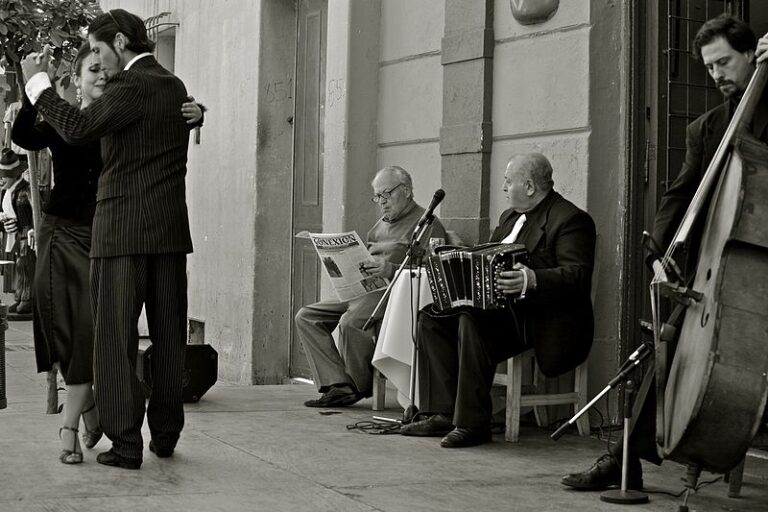
I’ve been fascinated by Argentine Tango for a while. The intensity, the focus, the precision, the musicality—it’s something that I’ve long admired, but has always had a “Look, but don’t touch,” quality for me.

A few years ago, I tried to learn Argentine Tango, and talked myself out of it. “It’s too hard,” I told myself, “Too much following, I’m not that good of a follow.” I made countless excuses and would avoid dancing Argentine Tango if I was at a social dance event where it was played.

(This video is fabulous and has made several rounds through the Internet. If you haven’t seen it yet, skip through the interviews at the beginning to see the amazing dancing!)   

I watch videos of Argentine Tango and am transfixed whenever I see someone dancing it live. Over the summer, I took an Argentine Tango class, and felt some of the walls I had put up around it start to weaken. It wasn’t as scary as I had made it out to be. Not quite as difficult. I started feeling like I might be able to get it.

Other opportunities to learn and to dance Argentine Tango came up—I got invited to classes and milongas, but was always conveniently “busy” or “sick” or “injured.”

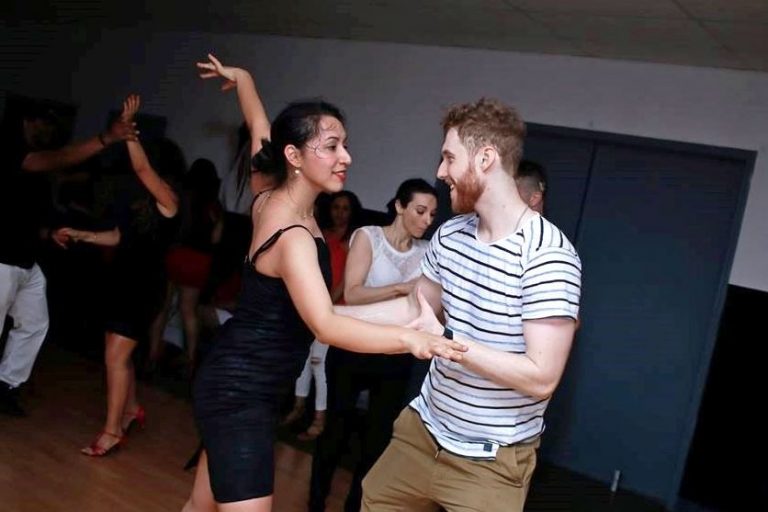
Finally, a few weeks ago, I got over myself and dove in. My boyfriend and I watched a Youtube video teaching the eight-count basic, and practiced in the kitchen. Feeling more confident after my impromptu “lesson,” I took a two-hour beginners boot camp and attended a milonga that same night.

I fell in love.

Every dance style and dance community has a different feel, a different flavor, a different culture. I barely dipped my toe into the vast ocean of Argentine Tango, but exploring it felt like discovering a brand new world.

For the uninitiated (like myself), it’s quite unlike most social dances. My social dance of choice is Salsa, and I had to “forget” a lot of what I know about Salsa to begin to learn Tango.

The most difficult part of learning Tango for me, but also the most exciting, is it’s improvisational nature. It essentially has no set steps or timing. Instructors have codified steps and sequences so that they are able to teach, but the way I understand it, Argentine Tango is sort of the Wild West of social dancing. In theory, you can do whatever you want as long as you stay in the line of dance (moving counterclockwise around the perimeter of the dance floor).

For someone who’s had the “1-2-3, 5-6-7” Salsa Basic drilled into my body and brain for almost a decade, having no basic step to return to and no set timing to fall back on is equal parts confusing and liberating.

Confusing, because you can’t rely on the muscle memory of the basic and “catching up” with the rhythm to catch you if you mess up. But also liberating, because Tango reminded me more of non-social dances, like ballet, contemporary or modern. Steps in non-social dances like those can be danced with whatever timing fits with the music or the choreographer’s vision—there’s much more freedom in the musical interpretation. Dancing Tango felt like the social dance version of a non-social dance—still connected with your partner, but with a whole world of musicality to explore.

Tango seriously forces you to be in the moment. To focus. To be absolutely present with your partner and the music. Although all social dancing requires focus and presence to lead and follow, Argentine Tango felt like it took that requirement to the next level.

Of course, I am a brand new beginner Tango dancer, so it’s all new and exciting for me right now. But I love how much focus is required for Tango. One of the main reasons that I dance is because it occupies my mind and keeps it centered on one thing. Dance is a form of moving meditation, and Argentine Tango feels like an especially focused form of that.

I spoke with a friend of mine who dances Salsa and Tango, and we had a hard time articulating how the energy is different between the two dances. He said every time he dances Tango, he tries to create the best connection possible with his partner. I think that’s the idea in all social dances, but it seems that the nature of Argentine Tango lends itself especially well to a strong connection between partners, because they have to be really in tune with each other for the dance to succeed.

Another reason I think that the connection is stronger is because of the form of a milonga. Most social dance etiquette says that after one dance, you should move on to another partner, but Tango is danced in sets of three songs called a tanda. You stay with the same partner for three songs in a row, and then switch partners. With this convention, it seems like you have more time to develop the connection and trust between you and your partner. The first song is the introduction and the warm-up—feeling each other out, establishing the rhythms, learning each others movement style. During the second song, you’re primed. You’re warmed up, you’re feeling more comfortable with your partner and you begin to explore a little bit more. By the third song, you’re in it together. You’ve gotten the introduction out of the way, you’ re comfortable and you can just connect and dance.

I noticed when I was dancing that by the third song in the tanda, I had almost forgotten about everyone else in the room. When dancing and when observing the dancers, there was a feeling of electricity in the room. You could almost see the energy that the dancers had created with their partners. I’d never seen anything like that before.


Argentine Tango is a beautiful dance with a rich history—if you haven’t checked out Roberto Ramirez’s series here about the history of Tango, do yourself a favor and check it out to learn more.

Your experiences with Tango are probably very different from mine—these were just my observations from my first real foray into this incredible dance. If you’ve been intimidated to try Tango for the same reasons I was, just give it a try. You might find a new favorite dance form! And for all of you tangeuros who have been with the program the whole time…I feel slightly jealous, but I’ll catch up eventually.
FAQ: What is a Heated Dance Competition?

0

With the World Salsa Summit  just a week away, competitors around the world are gearing up for this annual event in Miami, Florida. Some will even be competing for the first time!  

In anticipation of the event, I thought I’d answer some of the most frequently asked questions about heated or “just dance” competitive divisions. If you’re thinking about competing for the first time, I highly suggest starting off with heated divisions (as opposed to a showcase division, where couples dance a choreographed routine to a specific song).

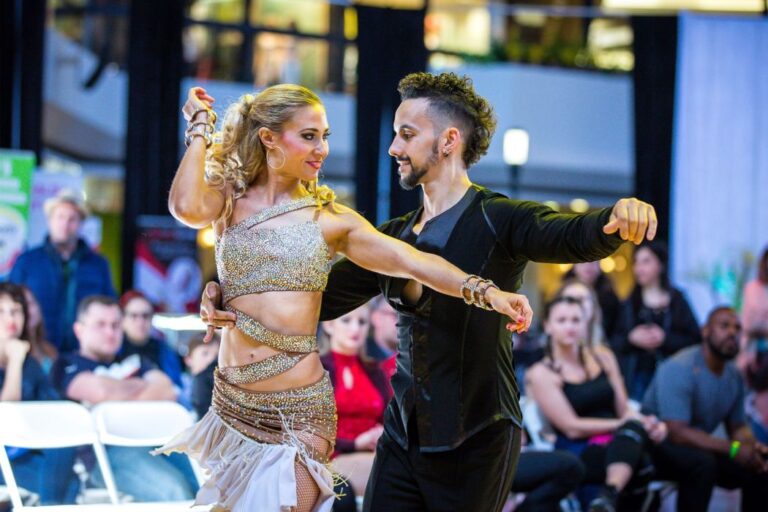
In a heated division, several couples take the dance floor at the same time and dance to a song in a specific genre played at random. Since you don’t know what the song is going to be, movements and turn patterns are improvised. It’s a lot of fun, and requires less preparation than competing with a choreographed routine (there are no steps to remember!).

Heated competitive events exist for professionals, amateurs, rising star, and pro-am couples.

I haven’t been dancing for that long and I’m nervous about competing against dancers with a lot more experience.

Pro-Am and Am-Am heated (or just-dance) competitions always have at least three different levels––beginning, intermediate, and advanced. This means you’re guaranteed to compete against dancers of similar experience and level.

Bigger competitive events often break those levels into even more categories and will have separate rounds for novice, beginner, pre-intermediate, intermediate, pre-advanced, and advanced dancers. In addition, competitions often have a 40+ or 50+ category (sometimes called a Silver Division) and a Junior category for dancers younger than 18 years old.

Pro-Am competitive divisions are generally broken down by lead and follow as well. This allows followers to compete against other followers and leads to compete against other leads in what are most often called “Pro-Am Female” (for followers) and “Pro-Am Male” (for leads) divisions.

How many heated or ‘just dance’ categories should I enter at a single competition?

Enter at least three to five just-dance divisions at a single competitive event (more if you’re not competing in a showcase division). Why? Because competing in several categories at a single event makes all the time and money you’ve invested preparing and traveling to the event worthwhile.

Think of all of these aspects as sunk costs: lessons, coaching, costumes, airfare, accommodation, taking time off from work. On competition day you’re going to wake up early to get ready, take time to do your hair and makeup and then you’re going to spend hours in the ballroom waiting for your division to be called. It only makes sense then to enter several categories at a single event to get the most out of all your preparation!

Can I compete in more than one experience level at a single competition?

Yes, you’re allowed to compete in as many dance styles as you want at your current experience level (beginner, intermediate, advanced, etc.), plus one level above.

For example, if you are a beginner dancer and the competition has three levels (beginner, intermediate, and advanced), and you want to compete in salsa and bachata, you can enter the following categories:

  • Pro-Am Just Dance Salsa Beginner
  • Pro-Am Just Dance Salsa Intermediate
  • Pro-Am Just Dance Bachata Beginner
  • Pro-Am Just Dance Bachata Intermediate

Enter the higher level in addition to your current level! Competing against more experienced dancers will challenge you and help you grow (and that’s ultimately what competition is all about!).

Plus, it’s really normal to be nervous for your first heat in a specific dance-style, so the higher, second level is kind of like a ‘second chance’ to go out on the dance floor once you’ve gotten all those nerves out! Sometimes dancers even end up placing in the higher level and not in their actual, current level because they feel more relaxed the second time they go out on the floor. More relaxed = you’ll dance better.

Do I have to compete in the same experience level for each dance style ? 

No, you do not. For example, if you’ve been dancing bachata for years and you’re super comfortable with it, but you’ve only just started taking classes in salsa and hustle, you might choose to enter a pre-advanced bachata division and a novice salsa and hustle category.

In this case, you could also enter the advanced bachata category, and the beginner salsa and hustle categories.

I don’t know what levels to enter! What should I do?

Ask your coach or instructor! They will give you honest advice about which levels to compete in 🙂

What if my professional partner has several students and we’re all competing in the same dance-styles, at the levels?

Not to worry! It’s common for professionals to compete with more than one student at a single competitive event, as well as for their students to compete in the same level (i.e. against one another). The organizers of the competition will make sure to break each round into smaller groups, so that a single professional can dance with all their students in a single division.

Generally this means that in your ‘round’ you will take the floor with your professional partner and a few other pro-am couples who are competing against you in your level and dance style.

Sometimes, however, you may go out on the floor with couples who are competing in a different level. For example, if you are competing in “Pro-Am Salsa Female Beginner” category, you may dance at the same time as some of the competitors in the “Pro-Am Salsa Male Beginner” division. Other times you may be on the dance floor at the same time as competitors in the “Pro-Am Salsa Female Intermediate” category. Don’t worry! The judges know that you are not in the same division as these other dancers and will make sure to score you accordingly.

Occasionally, if the competition or the division is small and your professional has a lot of students in the same category, you may be asked to compete on the dancefloor in a just-dance or heated division without other couples on the floor at the same time. At first this can feel a bit intimidating!

Make sure to talk to your coach and mentally prepare for this situation at competition so that it doesn’t throw you off. Then, work that floor! Instead of being nervous that everyone is watching you, reframe it so that it feels like “woah, isn’t this cool! I have all the space. I don’t have to share!” But don’t take the fact that you’re the only one on the floor at that time for granted––you still have to work for that title! Dance hard, enjoy yourself, and execute everything you’ve been practicing in the studio.

What if my professional partner gets tired during all the different heats?

Their job is to dance! Just like you’ve likely spent hours and hours training for your professional career and developing the right skill sets, so has your professional dance partner. One of those skills? A very, very high level of stamina that’s required to dance in 10 or 12 or 25 different heats in a few hours.

Can I have more than one professional partner?

Yes, you can. For example, if you want to compete hustle, and your professional partner is not a hustle dancer, you can compete with a different pro for that division. Or maybe your professional partner is not able to go to an upcoming competition because he or she is already booked at a different, non-competitive event. In this case, it is perfectly acceptable to attend the competitive event and compete with someone else.

The polite thing to do is talk to your current professional partner and explain that you still want to attend the event and ask if he or she has a suggestion for who you should compete with in their absence. If your professional partner really has your interest at heart, he or she will want you to attend the competitive event even if they can’t, because they know that doing so will help you keep growing as a dancer (and there aren’t all that many competitions throughout the year!).

Leave a comment below if you have another question about competition, or any advice to share! 

Defensive Dancing: Handling Uncomfortable Situations

1

What are your options when you feel uncomfortable in the middle of a dance? What can you do when someone is just trying to flirt with you, rather than actually dance? Is it okay to leave a dance before the end of the song if they haven’t actually touched you inappropriately (yet)?

Whether you’re leading or following, unpleasant situations can come up that make you feel trapped. Plenty of us are so thoroughly conditioned not to make a scene that we feel we can’t do anything but endure to the end of the dance.

Fortunately, there are plenty of ways to respond to an uncomfortable situation without confronting the person head on. In this follow-up to last month’s tips, we’ll look at some less direct ways to alleviate your discomfort.

Subtle Verbal Cues

“So, where do you live? Are you here every week? Do you have a boy/girlfriend? You’re so good looking. I love the way you move. Do you meet a lot of guys/girls dancing? How about we get a drink together sometime?”

One route is to choose the shortest possible answers to their questions. It’s hard to carry on a flirtation with only one-word responses, and curtness is usually perceived as lack of interest or even annoyance.

Another approach I sometimes use is turning the conversation around by asking a question that invites them to talk extensively about themselves, hopefully bringing us closer to the end of the dance. I try to choose something completely non-cuddly, maybe even something out of a job interview: “What’s the most difficult situation you had to face at work in the last month?” or “What books have you read recently?”

Perhaps my favorite idea comes from Anna-Grace in Denver: “Out awkward them. If they say I smell nice, I get all into talking about this new deodorant I found and make it a whole big topic.”

It takes a special kind of dedication to turn talk of deodorant back to flirtation!

John in Durham gives us another good idea for derailing the conversation: “Numerous questions are social code for ‘I am interested in you’; ‘Let me tell you about my significant other’ is social code for ‘I am not interested in you.’”

Defensive Dancing

There’s also plenty of options for asserting your boundaries that don’t involve speaking.

No matter which role you dance, avoiding eye contact completely indicates deliberate disinterest or discomfort; either way, a good message to send if you’d like someone to stop hitting on you.

Strengthening your frame will both communicate tension and help you keep your distance. Tighten the muscles in your back and arms and increase the pressure against your partner’s hand.

If you’re leading, you can choose moves that take your follower away from you. For a lot of dances, that’s as simple as introducing a turn. For close embrace dances, opening into a promenade position is the best way to give yourself more space.

You can then continue to lead and move in a way that requires a more open position, whether through turning figures, breakaway, or pivoting moves that keep your follower too busy to hold you close.

I have a “defensive dancing” mode for following. For dances like salsa or swing, I put my left hand on the front of my leader’s arm and I push away. I then “maintain my bubble” by keeping pressure from both my hands and looking for connection only in the hand on my back. Creating more distance also makes it difficult for my partner to have their hand too low!

For close embrace dances like kizomba I start by putting my forearm(s) on my partner’s clavicle so that I can push away to create a bit of distance. I also keep my pelvis tipped away so that there can be no easy transition to grinding.

(Incidentally, all these techniques are great ways of communicating that you want to maintain more space, even outside the specific situation of a partner giving you unwanted flirtatious attention.)

Jake in Baltimore gives this hopeful advice, “Pull away from close embrace/close connection and focus on your own dance more than the questions you’re being asked. Your partner might get the hint, or they might really appreciate your dance and want to join in.”

Walking Away Gracefully

It’s completely fine to end a dance in the middle if you feel uncomfortable. You don’t have to wait for a particular line of impropriety to be crossed. You’re not collecting evidence to prove you were justified in walking away.

Once you’ve made that decision, though, it can still feel very awkward to terminate your interaction. While many dancers shared last month that they tell their partner why they are ending the dance, that can be an intimidating step to take.

One tried-and-true alternative is to stop moving, say “thank you,” and walk off the floor. Sure, you’re not really thankful for that dance, but it provides a little social lubricant.

Another simple approach I encourage you to try is to stop dancing, say “I have to” while turning away and then walk off the floor without finishing the sentence. You don’t owe them an explanation. They’ll probably fill in the blank for themselves.

If you truly dread that moment when you’ve stopped dancing and they’re still holding you and looking at you for an explanation, there’s another possibility. First, initiate a turn; followers can either roll clockwise off the leader’s right arm or lift your own left hand to create a window (an escape hatch, if you will). Then pat your partner’s shoulder or squeeze their hand, let go, and walk away.

Scene Considerations

In spite of the previous negative experiences we carry with us, I think it can be helpful to try to remember the person we are dancing with is a complex human being who might not mean any harm by their actions. Some people are players, some are even predators, but a lot of the ones who make us uncomfortable do so unintentionally.

That means using a direct conversational approach could lead to a useful teaching moment. We can let those partners know that what they’re doing isn’t okay for us (and therefore may not be all right for others) with such simple statements as:
“I don’t want to discuss my personal life.”
“I’m not comfortable with these questions.”
“I would prefer not being held so close.”
“Let’s dance in a more open position, please.”

Jay Byrd, a lindy hopper in Wisconsin, offers this perspective: “I think some are optimists as well, or even willfully ignore signs, and take even curt responses as signs of encouragement. I get wanting to take the focus off of dancing to relieve pressure for themselves, but at a certain point, my compassion ends. I simply don’t have time or patience to make this discernment between socially awkward and socially exploitative anymore.”

Organizers and teachers can make this easier for all of us by setting expectations for what’s normal or acceptable in the dance scene. Sarah Lind Temmer in NYC remembers, “There was a dance I used to go to in Colorado that went over stuff like that before the dance started. They’d say things like, ‘We’re here to dance, and we recognize that we’re also meeting new people and that’s exciting, but if you think someone is cute ask them if they’d like to get a drink/food/chat nearby! Please keep it off the dance floor.’

“There was also some framing around how that makes the dance more accessible to everyone by ensuring that it’s a safer space.”

These measures can help dancers who are new to the scene avoid causing uncomfortable situations. That in turn makes it easier to recognize the people who are more interested in hooking up than having respectful, enjoyable dances.

Our Responsibility

As much as it might help our scene to try to view these uncomfortable moments as teaching opportunities, it’s also entirely fair to ask yourself whether you have enough energy to attempt to educate your dance partner about respecting boundaries. Their next partner might have cause to thank you, but it’s okay to decide not to take that on.

There’s nothing wrong with just redirecting the conversation or dancing defensively. It’s also fine to smile stiffly, pretend you’re fine, and wait the song out.

But we should also know we have a right to protest or walk away.

“I don’t think there’s any one right answer,” says a lindy hopper and blues dancer from Montreal.
“You can just ignore it even though it makes you uncomfortable. You can try to politely hint or change the flow of things. You can flat out stop or tell him he’s bothering you. All of these choices are legit for various reasons.”

A brief history of Tango – Part 4 of 4

0

When were “The Dark Ages of Tango?

In PART FOUR of this series, we talk about how Tango went underground. In 1955 the political climate in Argentina changed, which affected Tango dancers and musicians directly. But it didn’t go away, it stayed alive thanks to a few artists, sometimes away from Argentina, ready to make a comeback in 1983 when the military junta lost power, and Argentina’s citizens began to dance again. Tango continues to evolve, with new styles being created and old school styles still being taught.

In this video, we go over all the most important events that took place in what some historians and researchers call “The Dark Ages of Tango”

  • A new oppressive military regime that didn’t encourage dancing.
  • The arrival of Rock n Roll in the late 1950’s which created some tough competition, especially among young dancers.
  • Astor Piazolla and his “New Tango”
  • The Film “Mi ultimo Tango” starring Spanish movie star ‘Sara Montiel’
  • The Broadway musical “Tango Argentino” which help make the music and the dance popular again.
  • The fall of the military junta in Argentina and the revival of tango as a national treasure.

What to Do When You Are Uncomfortable

3

This is written for all of you who have ever felt uncomfortable because of someone coming on to you during a dance. If you’ve ever felt trapped by the duty to be polite or worried about the consequences of disengaging from a situation that was “only” discomfiting, you’ll want to read on.

However, there will be descriptions of sexual harassment and mention of sexual assault. Please consider that before you continue.

A Reader’s Question

After Richie’s article “When Dancing Becomes Groping,” Meagan in New Delhi left a comment posing the following question:

“I am wondering – when is it okay as a follow to leave a dance before its end? I’m an intermediate dancer and I know as a follow I had the shorter learning curve and want to help others learn, so I will gladly dance basics with someone. BUT… sometimes I accept a dance from a guy whose intention it seems is to flirt, talk and hold me close, usually off beat or hardly trying dance moves. In these dances, there is usually no feeling of connection and in my experiences, it is these dancers that try to ‘cop a feel’.”

I was inspired to respond to this question as it fits in with a few articles I have written recently that look at how to make our dance scenes more welcoming, respectful, and positive about consent.

What’s the Problem?

As much resistance as we face confronting situations of clear trespasses of consent, it’s extremely difficult to address how to handle situations where there hasn’t been any behavior that clearly deserves condemnation.

So let’s be clear what we’re actually talking about here. This isn’t a question about not enjoying dancing with beginners or anyone who sticks to basics. It’s also not about turning down a dance with someone you know behaves inappropriately. Perhaps most important to clarify: this isn’t about whether you enjoy talking while dancing – although when I posed my own version of Meagan’s question on my social media, I quickly found out that an incredible number of people just hate all conversation on the dance floor.

Here we are considering how to deal with someone whose conversation focuses on physical compliments and/or attempts to maneuver you into making one-on-one plans, while they are holding you close and barely dancing. Yet they haven’t done anything that definitely crosses a line.

“What’s the big deal?” some of you are thinking. “So your partner is holding you a little closer than called for. So they’re trying to flirt with you. Lots of people come to the dance scene hoping to make new personal connections in that direction. And some people just enjoy flirting!”

Sure, any one of us can endure four minutes of such behavior and walk away at the end of the song without damage.

Except this is rarely an isolated experience.

It’s not four minutes once a month. It’s not even four minutes once a week.

For many of us, it happens every time we go out dancing. And if we’re still open and willing to dance with everyone, it’ll likely to happen more than once in a night.

On the Defensive

Think about walking through a large shopping mall. There are numerous vendors in kiosks in the middle of the hallways. There are salespeople trying to hand you a brochure, offer you a sample, and generally pull you in so they can sell you something. They stand in your path so you have to either engage with them or detour to avoid them.

Most of us are used to this sort of thing. But imagine that happening not just on the occasions you go to the mall, but every time you walked anywhere. How would it affect your way of moving through the world if every time you wanted to go somewhere, there were pushy salespeople trying to get something from you?

Let’s bring that idea back to the dance floor. We’ve come out to dance, but don’t really want to deal with the “sales pitch” coming from our dance partner. Not only that, this is the kind of behavior that very often leads to unwanted, inappropriate touching – “copping a feel,” as Meagan put it.

I have personally experienced everything from caresses on my face, fingers massaging my lower back, pelvic grinding, kiss on my neck and deliberate hands on my breasts or the seat of my jeans, far more times than I could possibly count. And given how normal it is for my friends to complain of similar experiences, I know I’m not an isolated, unlucky case. Far too many have also shared stories of sexual assault.

Unfortunately that mean I’m going to be quick to pick up on any signs that might indicate I’m headed towards sexual harassment. Regardless of whether the person is a predator or just someone who has never learned about respecting boundaries in the dance, I’m going to start dancing and speaking defensively. I may also choose to end the dance mid-song. I simply can’t give everyone the benefit of the doubt, because that puts me at too much risk.

What to Do When It Becomes Uncomfortable

I wanted to see how other dancers feel about these kinds of situations. I asked for input on a few different corners of Facebook and received comments from Brazilian zouk, blues, lindy hop, kizomba, salsa and tango dancers. Thanks to people who were willing to share their words more publicly here, you’ll get to read advice from a wide range of people.

I think it’s worth saying up front that things will necessarily vary widely by scene. For example, tango communities don’t generally encourage any talking on the floor, let alone pickup behavior. Kizomba has long been a close embrace dance, which can make the range of error for “holding too close” much more narrow. That’s in addition to our own individual varying levels of comfort, both with people who are clearly after something other than an enjoyable dance, and with speaking up or taking action to assert boundaries.

Let’s Talk

If someone is making you uncomfortable, the most certain way of getting back to a dance you can enjoy (or at least tolerate) is to talk about it.

Greg Avakian, an instructor of blues and WCS in Philly, offers the following suggestion for starting an honest conversation: “Look at your partner with a smile and ask ‘Hey, um, are you trying to flirt with me?’

“For one thing, it will tell you something about their character if you think they are answering honestly. It can also lead to fairly intellectual/unattached conversation about the dance scene, etiquette, and being kind and polite to each other.

“If yes, you can say ‘Mmmmm …maybe not such a good idea. Let’s just dance instead.’

“If no, ‘Oh that’s good. Ok, sorry; I wasn’t sure.’”

What I love about this suggestion is it’s very non-threatening and doesn’t bring assumptions to the conversation. It’s possible to move on gracefully after that. Plus, as Greg points out: “If this person is secure and has a sense of humor, you guys can laugh about it during future events.”

The Direct Approach

However, sometimes the person’s intent is entirely too clear. Cory Davis from Seattle won’t stand for unwanted come-ons; she’d rather “remove their hands from my body and tell them they’re being inappropriate and that they need to learn to actually dance if they want to fit in. I’d probably tell an organizer about it too. But I understand why not everyone feels comfortable being that direct.”

Nathan from Seattle shares: “Every time this happened to me, it was accompanied by them being equally persistent in physically pressing/connecting against/to me. I became very accustomed to saying ‘I hate saying this to such an attractive young lady, but this works better if you don’t shove your hips up against me. I’m here to dance and I need space to move.’

“If I had to push them back off me 3 times in one song, I would generally tell them I was walking off the floor if they did it again. If this became a recurring issue, I would sometimes look them in the eye when they asked me to dance and straight up ask ‘Are you going to keep your hips off me and respect my space?’ That generally finally got the message through. They either respected me better or stopped asking me to dance.”

It can definitely take a while to overcome our sense of obligation to finish a dance, so I like this comment from Ashley in DC: “I used to be ‘polite,’ finish up the dance and refuse to accept other dances. Now I tell them they’re making me uncomfortable and end the dance in the middle though because I’m so done with that.”

What Will You Do?

Trying to talk with the dancer in question in these kinds of situations can admittedly contribute to your feeling even more uncomfortable. You have to evaluate for yourself if you feel safe confronting them, especially if your scene hasn’t paid much attention to these kinds of issues. Sometimes the cost-benefit analysis might tell you to endure until the end of the song. In other situations the best option is indeed to end the dance early and walk away.

Since this article has already gone long, I invite you to come back next month for more ideas on how to respond when your dance partner is making you uncomfortable. We’ll look at a variety of subtler options, both verbal and physical, that enable you to mitigate or even escape your discomfort while avoiding confrontation.

In the meantime, share your own experiences and advice with us in the comments!

Thanks also to David Hendershot for invaluable advice on my writing and consenting to my using his image out of context.

Dance Spotlight – Diana Marleth Aguinaga

Diana Marleth Aguinaga is in the Dance Spotlight! Diana lives in Dallas/Fort-Worth and is a member of the SeduXion dance team directed by Roberto Lay.  Check out some fun facts about Diana including her favorite dance video! Want to nominate someone? Contact us!

Where are you from?

Dallas, Texas.

Favorite DFW Dancers?

Roberto Lay and Camillo Moreno. These two are so unique and talented!

Favorite DFW Socials/Places to Dance?

Two of my favorite socials are the Sensual Social in Carrollton and the Pura social in Ft. Worth!

Dance Pet Peeve: (Hygiene, No connection, People who teach while dancing, etc)

There are many types of social dancers and performers.

  1. It makes me sad when social dancers get intimidated by the ones that perform!
  2. No technique while performing.
  3. No confidence while you’re social dancing.

Favorite Dance Moment?

Joining Seduxion and finally getting to perform “Pillow Talk” at the 2017 Dallas Bachata Festival!

Favorite Dance Genre?

Bachata is what got me into dancing and it will always be my favorite.

What movie title describes your attitude while dancing? Why?

“Flashdance.” I have always dreamed of becoming a professional dancer. I thought that it was a childish dream but dance has always been always in my heart. My husband has been supportive and he’s also performing with me and we both love to do it together – it’s a dream come true. My mentor has been supportive as well and I’m so thankful for him. Dance has been a purpose in my life and has challenged me to become a better person and dancer. It also has challenged me to pursue my dreams!

Favorite dance video you’d like to share? Why is it your favorite?

Because it’s my first performance in a bachata congress with so many talented dancers! Seduxion!

https://www.youtube.com/watch?v=6mfV-2rv1KE

We Need to Change the Way We Think About Creativity

3

Why don’t we think about—and teach—creativity and musicality in the same way we teach adults and children how to build other skill sets?

After all creativity, artistry, and musicality are learned skill sets, just like dance technique, healthy eating habits, or verbal communication skills.

You don’t wake up one day and voilà, you’re suddenly creative! You build these skills little by little. You practice them. You improve them day by day, week by week until years and years later you’re so good at them that you no longer remember what it was like not to be creative or musical.

Sure, creativity and musicality are complex skills. They are harder to master than learning how to drive a car or roast a chicken, for example. They require diligent, rigorous practice, and most people fail the first and second and even the 80th time they try them. But if you keep practicing—and I mean really keep practicing them—you will master them.

Research backs this up too. Educational travel company Rustic Pathways, for example, has found that students exhibit an increase in non-cognitive skill sets, like intercultural competence, independence, and self-awareness after having participated in a structured travel experience.

Additionally, scientists have found that the way your brain is mapped actually changes throughout your life depending on what skill sets you most often exercise; the anatomical areas of your brain actually grow as you become an expert in a certain area, like public speaking, music, or sports. (Carmine Gallo talks about this in the first chapter of his book, Talk Like Ted. If you have the 2014 print edition, check out page 33.) 

As a dance community, we must recognize that creativity and musicality are learned skills. We need to teach these skill sets in the same way we dancers steps or turn patterns.

If we don’t, instead of welcoming and encouraging others to learn this art form that we all love so much, we send the message that “you cannot achieve this.” That’s a dangerous message to echo within any community, because it doesn’t foster a growth mindset among its members, new or old.

When human beings feel like they’ve learned all that they can, when they feel like they are incapable of becoming better, that’s when they stop trying. That’s when dancers stop dancing and once packed socials and classes start to feel like ghost towns.

There’s immense power in believing that you can improve, in fully believing ‘not yet, but one day.’ That is the thinking we need to intentionally foster within our community so that the latin dance scene continues to grow, and so that we produce even better creative work together.

A brief history of Tango – Part 3 of 4

0

When was the ‘Golden Era’ of Tango?

It began in 1930 and lasted about 25 years. In part three of this video series, we talk about how Tango saw the rise of its first superstars, and how it was everywhere in the media. The dance and the music began to separate from each other, but there was still plenty of Tango for everyone. It took Tango about 100 years to reach the heights and the glory, but in 1955 tango hit a major roadblock, before its renaissance a few decades later.

A Brief History of Tango: Part 4

Dance Spotlight – Sharmane Boudy

Sharmane Boudy is in the Dance Spotlight!  Sharmane lives in the Dallas/Fort Worth area is a member of the SeduXion dance crew led by Roberto Lay.  Check out some fun facts about Sharmane including her favorite dance moment!

Want to nominate someone to be in the Dance Spotlight? Contact us!

Where are you from?

I was born in Anchorage, Alaska, but spent most of my adult life in San Diego, California.  I now live in Fort Worth.

Favorite DFW Dancers?

Roberto Lay, Amanda Brown, Jose Hernandez, and Christian Acosta.

Favorite DFW Socials/Places to Dance?

Pura Fort Worth and Stratos.

Dance Pet Peeve: (Hygiene, No connection, People who teach while dancing, etc)

Not pointing toes, collecting, and rhythm. If they don’t have the timing of the music right it’s like a dagger to my heart.

Favorite Dance Moment?

Joining SeduXion and finally making friends here in Dallas after a year.

Favorite Dance Genre?

Contemporary

What movie title describes your attitude while dancing? Why?

“The Good, The Bad, and The Ugly”. I dance for fun which is the good. I dance for bad reasons to express my pain in my movement, and I dance ugly for the simple reason that not all dance is pretty. There are ugly sides to it and I embrace it all.

Dance Spotlight – Maria Rangel

Maria Rangel is in the Dance Spotlight!    Check out some fun facts about Maria including her favorite places in DFW to dance! Want to nominate someone? Contact us!

Where are you from?
I’m from Mexico, but have lived in Texas most of my life.

Favorite DFW Dancers?
There are many dancers I enjoy dancing with; however, as long as they have a good connection when dancing by smiling, and having fun then they are favorites! Connection and having fun is the key when dancing whether you’re a beginner or professional.

Favorite DFW Socials/Places to Dance?
Depends on the day of the week and when I’m free to go out. However, I enjoy going to Se Boto La Salsa at Los Comales with the Vinilos Boom, Pura Events (Dallas & Fort Worth), Los Lupes with DJ Jose, Sensual Social, and many others.

Dance Pet Peeve: (Hygiene, No connection, People who teach while dancing, etc)
Hygiene such as odor/breath is something everyone can control and everyone can appreciate neutral odors rather than unpleasant ones.

Favorite Dance Moment?
The connection that can happen on the dance floor when both dancers are in sync, enjoy the music, and have fun while dancing.

Favorite Dance Genre?
I enjoy salsa and urban kizomba; however, I like all genres of music because they allow me to express myself whether it’s salsa, urbankiz, tarraxa, country, belly dancing, bollywood, classical, etc.

What movie title describes your attitude while dancing? Why?
“Street Dance 2”. I like the fusion between all different styles of dancing.  They can inspire one to keep learning new dances and techniques to express oneself and along the way you create a family.

Favorite dance video you’d like to share? Why is it your favorite?
Beautiful choreography, musicality, passion and Andrea Bocelli singing makes for an amazing video, in my opinion.